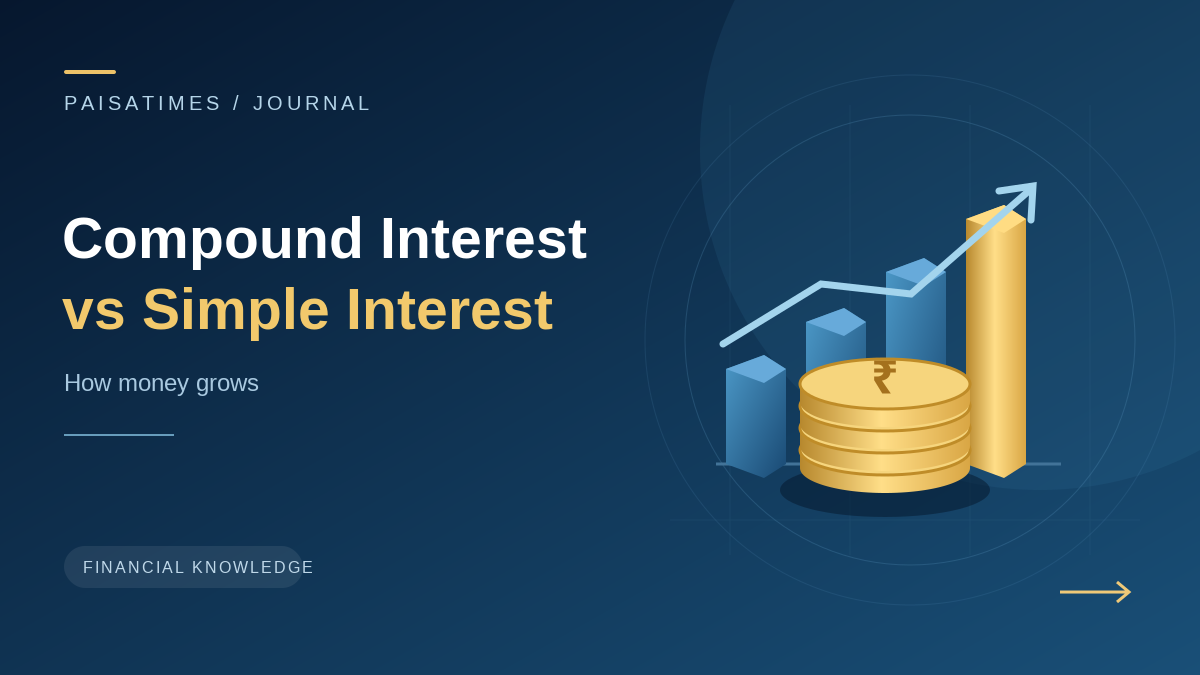
Starting early and staying invested allows compounding to work on both your principal and accumulated interest, generating exponential wealth.
The Fundamental Difference
Most people understand interest as a fixed reward for keeping money in a bank. In simple interest, you only earn returns on your original deposit. With compound interest, your earnings are reinvested back into the balance. You start earning returns on your returns, creating an accelerating snowball effect over extended periods.
The Math Behind the Snowball Effect
Consider an initial investment of ₹1,00,000 growing at an annual rate of 10% over 20 years. Under simple interest, you receive a flat ₹10,000 every year, totaling ₹3,00,000. Under annual compound interest, the final portfolio reaches approximately ₹6,72,750—more than double the simple interest outcome without adding an extra rupee from your pocket.
Why Time Matters More Than Capita
The true power of compounding is heavily back-weighted. During the first 3 to 5 years, growth looks slow and almost identical to simple interest. The exponential curve only becomes obvious in years 10, 15, and 20. This is why disciplined investors prioritize time in the market rather than waiting until they have large sums to begin.
Verify With Your Own Numbers
Before setting long-term goals or choosing between fixed income and market-linked instruments, test multiple compounding frequencies and time horizons. Using a dedicated calculator lets you see exactly how adjusting your tenure or contribution frequency shifts your final trajectory.
Sources & further reading
Original PaisaTimes explanations, with official resources for further reading.
This article provides general financial education, not personalised investment, tax or legal advice. Market-linked investments can lose value. Verify current product terms and consider qualified advice for your circumstances.